 Sunsir – Globale OEM/ODM-løsninger til køkkenapparater
SØG
Søg i butikken
Søg på webstedet
— Vin | Whisky | Brandy | Øl —
— Vin | Whisky | Brandy | Øl —
Blogs
Have you ever wondered what goes into making a dependable kitchen appliance? Fundamentally, it’s a blend of advanced manufacturing, skilled workmanship, and relentless quality control. This article gives you a brief look inside the process, showing how modern factories ensure the tools in your home are built for performance and safety.
The process begins on structured production lines. Here, efficiency and consistency are key. For instance, during the assembly of a food dehydrator, different units move through dedicated stations. One station might install the heating element with calibrated torque tools, while the next secures the fan system that ensures even air circulation. This semi-automated flow allows for both high production capacity and focused human oversight on critical assembly steps.
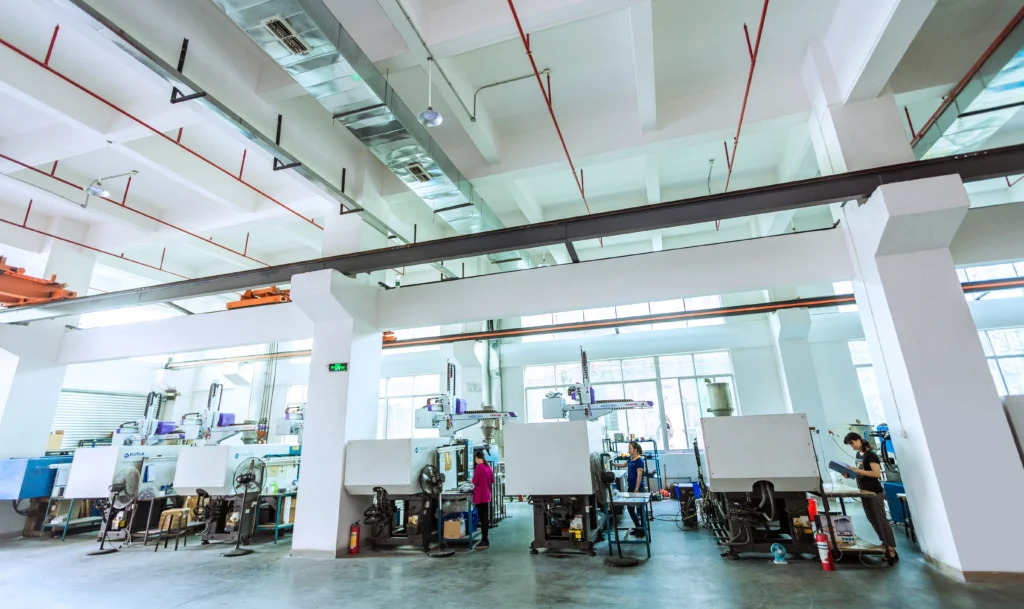
Of course, assembly is only part of the story. Next, every product must pass through our multi-stage quality control protocol. This system acts as a final safeguard to ensure reliability.
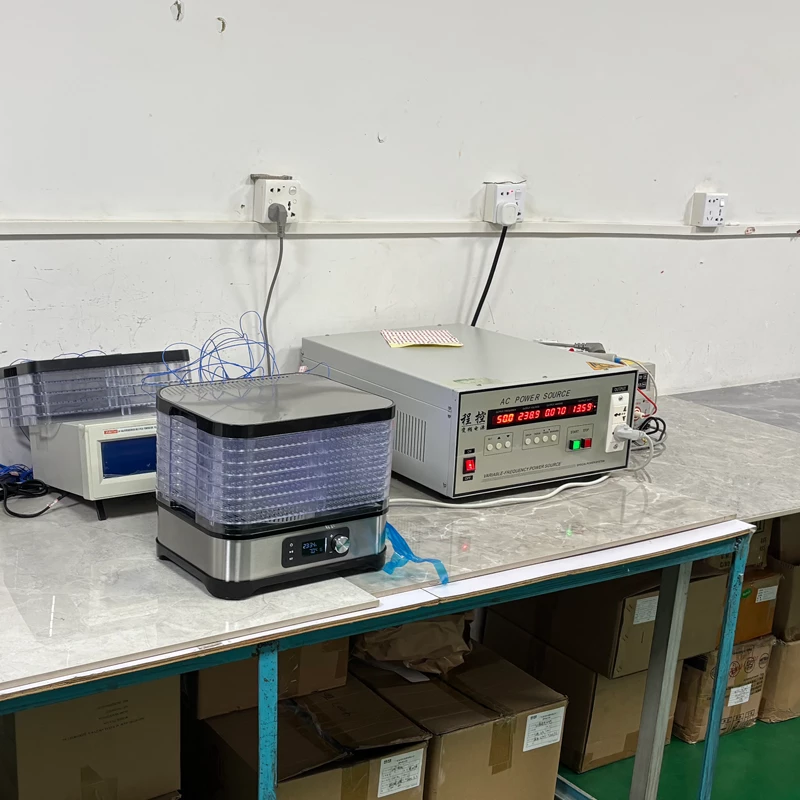
To illustrate, let’s consider safety and performance testing. For a food dehydrator, this isn’t just about “if it turns on.” Specifically, tests include running the unit at maximum load and temperature for an extended period to monitor heat distribution and stability. Additionally, safety features like automatic overheat protection are rigorously triggered to confirm they function correctly. These detailed checks are what translate OEM manufacturer specifications into real-world reliability for the end-user.
In conclusion, the kitchen appliances you rely on are the result of defined systems and commitment. From the production line to the final audit, a focus on process-driven manufacturing and forensic quality control ensures that every product meets its design promise. Ultimately, this behind-the-scenes work is our foundation for building your trust.
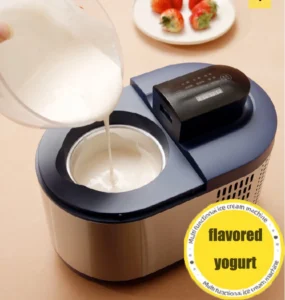
Elsker du is? Drømmer du om at lave dine egne smagsvarianter derhjemme? Mange synes, det er svært. Gamle maskiner har brug for lang indfrysningstid. Man skal planlægge i forvejen. Men hvad nu, hvis du kunne lave frisk is, når du vil? Det kan du nu. Den...
Se detaljer
When evaluating freeze dryer vs dehydrator, therefore, OEMs and procurement teams must carefully balance product quality, throughput, and overall cost. In many product lines, food dehydrators deliver fast, cost-effective results; in others, freez...
Se detaljer
Er du træt af snacks fra supermarkedet, der er fyldt med konserveringsmidler? Sig goddag til din nye køkkenhelten – hjemmets dehydrator! Sund og tilpasselig: Lav æblechips, bananbidder eller endda tørret kød uden tilsætningsstoffer og uden dårlig samvittighed. Budgetvenlig: ...
Se detaljer
For OEM- og ODM-købere handler valg af den rigtige fødevaredehydrator ikke kun om udseende eller enhedspris. En pålidelig dehydreringsmaskine skal levere stabil ydeevne, fleksibel tilpasning og langsigtet forsyningskonsistens. I denne vejledning forklarer vi...
Se detaljer English English
 Russian
 French
 German
 Spanish
 Italian
 Polish
 Dutch
Dutch Swedish
 Danish
 Finnish
 Norwegian
 Czech
Czech Hungarian
 Romanian